 IsraelLaw
Few families think through the business succession question before they need to. Then a father in Haifa dies and leaves behind 60% of a profitable construction company. A daughter in New York discovers she is now a co-shareholder alongside two Israeli partners she has never met, who are not happy about the arrangement. A surviving spouse learns that the successful catering business her husband ran for 20 years cannot simply be handed to her — it was a sole proprietorship, its commercial license was personal to him, and the bank account is frozen.
The legal rules are not complicated once you understand the framework. But they operate differently from what families in the US, UK, or Australia might expect, and the gaps between what people assume will happen and what actually happens can be expensive. This guide covers every major business structure and what heirs — including foreign nationals living outside Israel — need to do at each stage.
1. Why Business Structure Determines Everything
Israeli business law recognises several distinct legal forms, and the inheritance rules differ significantly between them. The three most common structures a foreign heir will encounter are:
- Private limited company (chevra beum, abbreviated BM): a separate legal entity registered under the Companies Law 5759-1999. The owner holds shares; the company itself does not die when the shareholder does.
- Sole proprietorship (atzmaut or osek atzmai): not a separate legal entity. The owner and the business are the same legal person. On death, the business assets and liabilities become part of the personal estate.
- Partnership (shutafut): a business arrangement between two or more people, governed by the Partnership Ordinance (New Version) 5735-1975. Partners share profits and liabilities; there is no shareholder register at a companies registry.
There is also the amuta (nonprofit association), the cooperative, and various public company forms, but those are rarely what foreign families deal with in an inheritance context.
The first step after a business owner dies is to establish which structure the business operated under. It is not always obvious. Many Israeli businesspeople operate through several arrangements at once: a company for the main business, personal accounts for secondary income, a partnership with a spouse or sibling on the side. Establishing the full picture requires reviewing the Companies Registrar records, the Israel Tax Authority files, and the deceased's personal bank accounts.
2. Inheriting Shares in an Israeli Private Company
A private Israeli company registered under the Companies Law 5759-1999 is a separate legal person. It does not die when its shareholder does. It keeps trading, employing, paying suppliers, and filing returns. What changes is the ownership of its shares.
Shares in an Israeli private company are treated as personal property under the Succession Law 5725-1965. They pass into the deceased's estate and are distributed according to the will (if there is one) or the intestate succession rules (if there is none) under Sections 11-16 of the Succession Law. Neither process is automatic or immediate.
The formal transfer of shares to an heir requires two steps:
- Succession order or probate order: The Registrar of Inheritance Affairs (Rasham HaYerushot), a division of the Ministry of Justice, must issue a succession order (tzav yerusha) confirming who the lawful heirs are and in what proportions. This is not a simple administrative stamp. The Registrar publishes notice of the application for 30 days and gives creditors and other potential claimants a chance to object. In uncontested cases, the process takes 3 to 5 months from application to order. Contested cases take significantly longer.
- Share transfer registration at the Companies Registrar: Once the succession order is in hand, the estate administrator (or heir, if no administrator was appointed) applies to the Companies Registrar (Rasham HaChevrot) to update the shareholder register. This requires filing Form 3 (share transfer notification) along with the succession order, the death certificate, and a certified copy of any will. The filing fee at the Companies Registrar for a share register update is NIS 1,650 (2026 rate). Processing typically takes 4 to 6 weeks.
3. Articles of Association and Shareholders' Agreements
The Succession Law says the heir gets the shares. The Companies Law says the company's articles of association and any shareholders' agreement may restrict what the heir can do with them.
Most Israeli private companies include transfer restrictions in their articles. The most common are:
- Pre-emption right (zkhut kidma): existing shareholders have the right to buy the inherited shares at a valuation agreed in advance (often using an independent accountant formula) before the heir can keep or sell them. This right typically runs for 90 to 120 days from the date the heir requests to be registered as a shareholder.
- Board approval requirement: some articles require the board of directors to approve any new shareholder before the share transfer is registered in the company's own books. The board cannot unreasonably refuse, but the approval process takes 30 to 60 days.
- Mandatory buyout clause: a shareholders' agreement may require that on the death of any shareholder, the surviving shareholders must purchase the deceased's shares at a formula price within a defined period — often 6 months. This is frequently funded by a cross-ownership life insurance policy held inside the company.
An heir who ignores these provisions and tries to act as a full shareholder — attending board meetings, instructing management, receiving dividends — without going through the pre-emption procedure may find that their actions are challenged as void under Section 307 of the Companies Law.
The practical implication: before assuming you will become a co-owner of the company, review the articles of association and any shareholders' agreement. Both are public documents at the Companies Registrar; a certified copy costs NIS 62 per page for certified copies or NIS 31 per page for uncertified, ordered via the official company extract portal.
4. Sole Proprietorship and Self-Employed Business
A sole proprietorship (osek atzmai or osek murshe) has no separate legal existence. The business and the person are the same. When the person dies, the business assets — equipment, inventory, receivables, intellectual property, the business name — all fall into the personal estate under the Succession Law and are treated as any other property the deceased owned.
This creates three immediate complications that do not arise with a company:
Business licenses are personal. An osek atzmai registration with the Israel Tax Authority (ITA, Rashut HaMasim) is personal to the individual. So is the VAT (mas erech musaf) registration and the business license (rishayon inyan) issued by the municipal authority under the Business Licensing Law 5728-1968. None of these transfer to an heir automatically. An heir who wants to continue operating the business must apply for new registrations — at the ITA, at the VAT Authority, and at the relevant municipality — as a new business owner. If the deceased had a professional license (an engineer's license, an accountant's license, a contractor's classification from the Ministry of Construction and Housing), the heir cannot use that license; they would need to hold equivalent qualifications in their own name.
The business bank account is a personal account. Israeli banks typically freeze a deceased individual's personal accounts until an estate administrator presents the succession order and death certificate. A business bank account held in the individual's personal name is treated the same way. The bank may allow urgent payments for essential business expenses (payroll, rent) if the estate administrator can demonstrate the need, but routine business transactions stop until the succession process is complete.
Business debts are personal debts. A sole proprietor's business creditors are the same as their personal creditors. They rank equally with all other creditors of the estate under Section 104 of the Succession Law. An heir who receives business assets from the estate takes them subject to whatever debts the business owed. If the business owed more than it was worth, the estate is insolvent and the Execution Office or a court-appointed administrator handles the wind-down under the Bankruptcy Ordinance or the Financial Rehabilitation Law 5776-2016.
5. Partnership Interests Under Israeli Law
Israeli partnership law follows the traditional principle that a partnership is a relationship between specific people, not an entity that survives automatically when one of them dies. Section 42(1) of the Partnership Ordinance (New Version) 5735-1975 states that a partnership dissolves on the death of any partner unless the partnership agreement provides for continuation.
What happens in practice depends entirely on what the partnership agreement says:
- No continuation clause: the partnership dissolves on death. Surviving partners and the estate divide the net assets in proportion to ownership. A dissolution account is drawn up by an accountant. Assets are sold or transferred at valuation. The deceased's share flows into the estate.
- Continuation with buyout: the most common professional arrangement. The partnership agreement specifies that on any partner's death, the partnership continues and the surviving partners buy out the deceased's share at a formula valuation within a set period (often 12 months). Cross-held life insurance policies typically fund the buyout: each partner owns a policy on the other, so the cash is available without disrupting the business.
- Continuation with heir as partner: rare in professional services (law firms, medical practices) but sometimes used in family businesses. The heir steps into the deceased's partnership share with the surviving partners' consent. Most partnership agreements require the surviving partners to approve any incoming heir; they cannot be forced to accept an unknown third party as a co-partner.
Unlike a company shareholder, a limited partner's (shutaf muglav) death does not dissolve the limited partnership under Section 70 of the Partnership Ordinance. Only the general partner's death triggers dissolution. This distinction matters for limited partnerships used as investment vehicles — the limited partner's estate simply inherits the economic interest without disrupting operations.
6. Tax Treatment for Heirs
Israel abolished inheritance tax in 1981. There is no estate duty, succession duty, or gift-on-death tax. An heir who receives company shares, a sole proprietorship's assets, or a partnership interest from an estate pays nothing to the Israel Tax Authority at the point of inheritance.
The tax event comes later, when the heir sells.
Capital gains on company shares: under Section 91 of the Income Tax Ordinance 5721-1961, the gain on any share sale is calculated as the difference between the sale price and the original acquisition cost. An heir who inherits shares does not get a step-up in basis to the value at the date of death. They inherit the original cost basis that the deceased paid when the company was founded or when the shares were acquired. For a company founded 30 years ago for nominal capital, this can mean an enormous taxable gain when the shares are eventually sold. Israeli residents pay capital gains tax at 25% (or 30% for a substantial shareholder holding more than 10%). Non-residents pay the same rates but may benefit from treaty-reduced withholding under a tax treaty with their country of residence.
New immigrant exemption: a new immigrant (oleh chadash) who inherited the shares is exempt from Israeli capital gains tax on any gain attributable to the period before they became an Israeli resident, under the 10-year exemption in Section 14(a) of the Income Tax Ordinance. This is a planning point worth noting before a decision is made about residency.
Business assets sold by the estate: if the estate sells business assets (equipment, goodwill of a sole proprietorship) before distributing them to heirs, the sale may trigger income tax or capital gains tax in the estate's hands. The estate is treated as a taxpayer for the period between death and distribution, and the estate administrator must file returns with the ITA for that period.
Betterment levy on real property used in the business: if the business owns real estate (a commercial unit, a workshop, an office registered to the company), the eventual sale of that real estate triggers betterment levy (hetel hashbacha) payable to the local planning committee under the Third Addendum to the Planning and Building Law 5725-1965 — in addition to capital gains tax. This is calculated separately on the planning value uplift.
7. Practical Steps for Foreign Heirs
A foreign heir inheriting an Israeli business interest faces the same legal framework as an Israeli heir but with additional logistical hurdles. Most of the process can be managed remotely with a properly structured power of attorney, but some steps require original notarized documents that take time to prepare.
The sequence a foreign heir should follow:
- Within the first 30 days: instruct an Israeli attorney to assess the estate and the business interest. Order a certified company extract (nesichat chevra) from the Companies Registrar (NIS 62 per page) to identify the shareholding, the articles of association, and any registered encumbrances. Obtain the deceased's personal tax file reference number from the ITA — this is needed for the estate administration tax return.
- Prepare a power of attorney: execute a general power of attorney in favour of your Israeli attorney before a notary in your home country, apostilled under the Hague Convention (for signatory countries) or consular-legalized (for non-signatory countries), and accompanied by a certified Hebrew translation. This allows your attorney to act on your behalf at the Registrar of Inheritance Affairs, the Companies Registrar, the ITA, and any bank. Cost: NIS 400-900 for the Israeli attorney's review; notary and apostille fees in your home country vary.
- File the succession order application: your attorney files at the Registrar of Inheritance Affairs, typically the district office closest to the deceased's last residence. Application fee: NIS 672 (2026 rate). The application must include the death certificate (apostilled if issued abroad), the will (if any), passport copies of heirs, and any proof of family relationship required under the court's instructions.
- Engage a business valuator: if the articles or shareholders' agreement trigger a pre-emption or mandatory buyout, commission an Israeli certified public accountant (CPA) to value the business interest at the date of death. This documentation will also be needed for the estate tax return and for future capital gains calculations. Valuator fees: NIS 15,000-40,000 depending on the complexity of the business.
- Manage the company or business during the gap: if the business must continue operating while the succession order is pending, ensure that authorised signatories at the company are in place. For a sole proprietorship, the estate administrator may apply to the court for a limited operating authority to keep the business alive pending distribution.
- Complete the ITA registration and any licensing: once shares are formally transferred, report the change to the ITA using Form 1301 (change of shareholding notification). For a sole proprietorship or partnership continuation, register the new owner at the ITA within 30 days of commencement of business.
Frequently Asked Questions
No. Israel abolished its estate tax in 1981. Heirs pay no tax on receiving company shares, a sole proprietorship, or a partnership interest from a deceased owner's estate. However, inheriting at a low historic cost basis can trigger significant capital gains tax when the heir later sells — calculated under Section 91 of the Income Tax Ordinance from the original acquisition price, not the value at death.
Not necessarily. Most Israeli private company articles of association include pre-emption clauses giving existing shareholders the right to purchase shares before they pass to an heir. A well-drafted shareholders' agreement often goes further, requiring the estate to sell at an agreed valuation method within 90 to 180 days. If the articles or shareholders' agreement are silent on this point, the heir takes the shares as a full co-owner and cannot be forced out without a court-ordered buyout.
Under Section 42(1) of the Partnership Ordinance (New Version) 5735-1975, death automatically dissolves a general partnership unless the partnership agreement contains a continuation clause. A carefully drafted continuation clause names how the surviving partners buy out the deceased's share, typically using a life insurance policy held inside the partnership. Without such a clause, surviving partners must liquidate the business and distribute the proceeds.
You can manage a business through a power of attorney granted to a local representative, but formal control of company shares cannot transfer until the Registrar of Inheritance Affairs issues a succession order and the Companies Registrar updates the shareholder register. In practice, most family-owned companies continue day-to-day operations under the direction of existing management during this period. For a sole proprietorship, the estate administrator can authorise continued operations — often the same person who later becomes the heir.
A company bank account is not frozen by the owner's death. The company itself does not die; only its shareholder does. The company can continue transacting normally under its existing authorised signatories. By contrast, a sole proprietorship's business bank account is a personal account and may be frozen by the bank pending succession documentation. Israeli banks are required to release estate funds to a duly appointed estate administrator under the Inheritance Law 5725-1965.
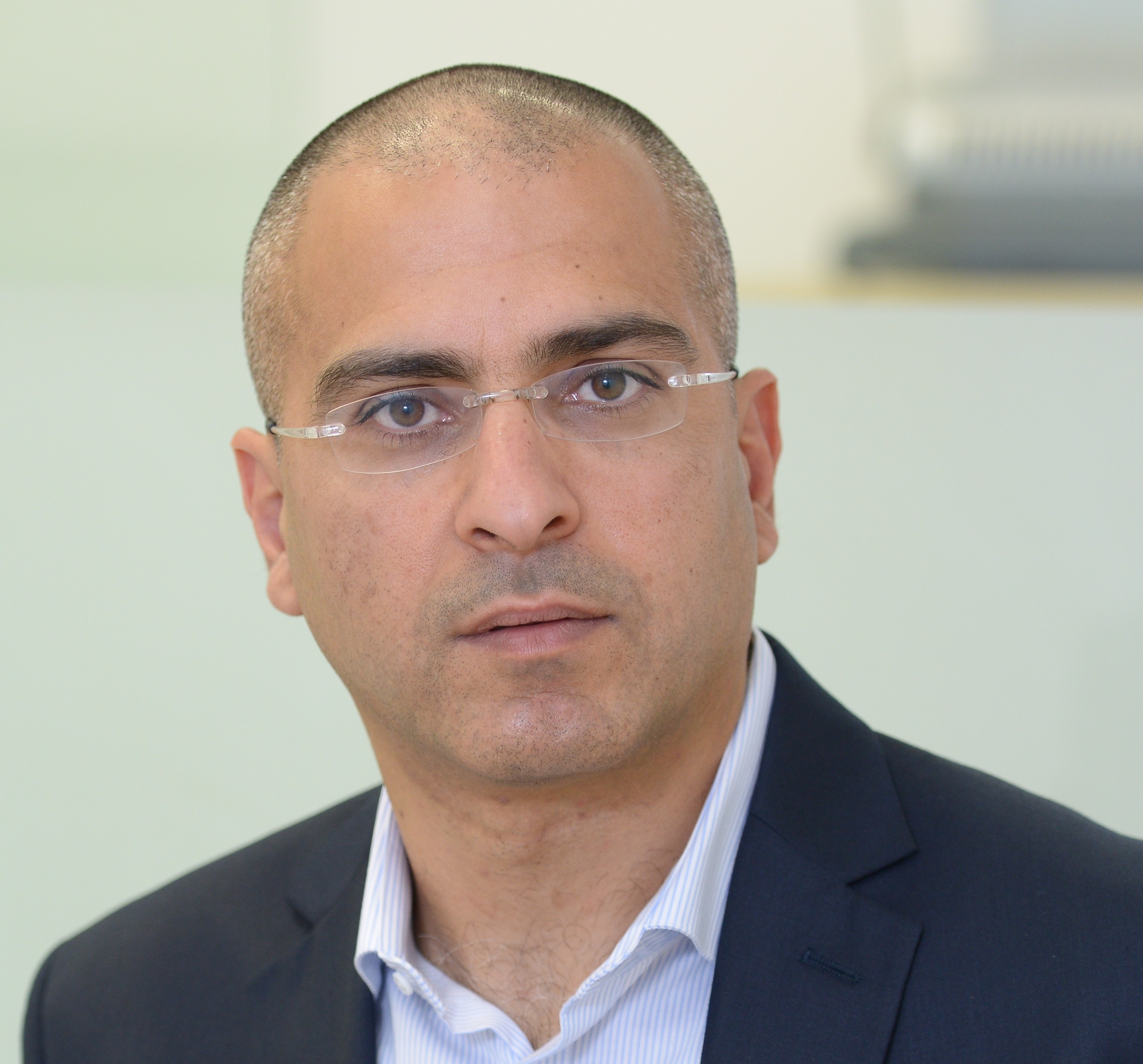
Licensed Israeli attorney practising inheritance law, corporate law, and international private law. Advises foreign nationals and diaspora families on Israeli estate matters from initial planning through court proceedings and cross-border asset transfers.
About the author